Travel to Siem Reap
Travel to Siem Reap
Travel to Siem Reap,SiemReap is a province (khaet) of Cambodia. It borders the provinces of Oddar Meanchey to the north, Preah Vihear and Kampong Thom to the east, Battambang to the south, and Banteay Meanchey to the west. Its capital and largest city is Siem Reap.
Siem Reap province is the tenth largest province in Cambodia. Having reached a population of one million in 2019, it ranks as the nation’s fourth most populous province. A large portion of Siem Reap province’s southern border is demarcated by the Tonle Sap and as such, it is one of the nine provinces that making up the Tonle Sap Biosphere Reserve. In modern times the province is best known as the site of Angkor and the Angkor Wat temple ruins, a UNESCO World Heritage Site. It is also the home of Banteay Srei, Roluos (temples), the UNESCO tentative site of Beng Mealea, and the UNESCO tentative site of Phnom Kulen National Park, home to the country’s largest reclining Buddha.Angkor Wat is a Hindu-Buddhist temple complex in Cambodia. Located on a site measuring 162.6 hectares (1,626,000 m2; 402 acres) within the ancient Khmer capital city of Angkor, it was originally constructed in 1150 CE as a Hindu temple dedicated to the deity Vishnu. It was later gradually transformed into a Buddhist temple towards the end of the century.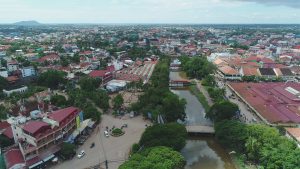
Siem Reap is the second-largest city of Cambodia, as well as the capital and largest city of Siem Reap Province in northwestern Cambodia.
Siem Reap has French-colonial and Chinese-style architecture in the Old French Quarter and around the Old Market. In and around the city there are museums, traditional Apsara dance performances, a Cambodian cultural village, souvenir and handicraft shops, silk farms, rice paddies in the countryside, fishing villages and a bird sanctuary near Tonlé Sap, and a cosmopolitan drinking and dining scene. Siem Reap city, home to the famous Angkor Wat temples, was named the ASEAN City of Culture for the period 2021–2022 at the 9th Meeting of the ASEAN Ministers Responsible for Culture and Arts (AMCA) organized on Oct 22, 2020.
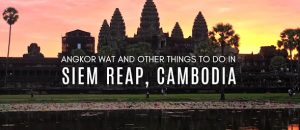
Today, Siem Reap has many hotels, resorts, and restaurants, due to its proximity to the Angkor Wat temples, Cambodia’s most popular tourist attraction.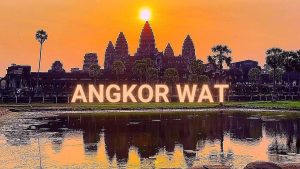
Angkor Wat was built at the behest of the Khmer king Suryavarman II in the early 12th century in Yaśodharapura (present-day Angkor), the capital of the Khmer Empire, as his state temple and eventual mausoleum. Angkor Wat combines two basic plans of Khmer temple architecture: the temple-mountain and the later galleried temple. It is designed to represent Mount Meru, home of the devas in Hindu mythology and is surrounded by a moat more than 5 km (3.1 mi). Enclosed within an outer wall 3.6 kilometres (2.2 mi) long are three rectangular galleries, each raised above the next. At the centre of the temple stands a quincunx of towers. Unlike most Angkorian temples, Angkor Wat is oriented to the west with scholars divided as to the significance of this.
The temple complex fell into disuse before being restored in the 20th century with various international agencies involved in the project. The temple is admired for the grandeur and harmony of the architecture, its extensive bas-reliefs and devatas adorning its walls. The Angkor area was designated as a UNESCO World Heritage Site in 1992. Considered by some experts to be the largest religious structure in the world, it is regarded as one of the best examples of Khmer architecture and a symbol of Cambodia, depicted as a part of the Cambodian national flag. The Angkor Wat is a major tourist attraction and attracts more than 2.5
Explore Cambodia
Welcome to kampot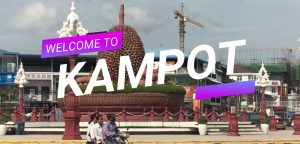
Welcome to Sihanoukville
Welcome to Kep